The Best Drain Cleaner: An Honest Guide to What Actually Works
Search for the best drain cleaner and you will find hundreds of products promising instant results. Here is the truth from the plumber’s side: the right drain cleaner depends entirely on the clog, and for most household situations, the product that works best is not a liquid at all. This guide compares every option honestly — what works, what does not, what damages your pipes, and what professionals actually use.
The Truth About Liquid Drain Cleaners
Liquid drain openers — the caustic and acidic versions on every hardware store shelf — are the most popular and the most problematic choice. Caustic (lye-based) products generate heat to dissolve organic material; acidic products are even more aggressive. Both share the same fundamental flaws:
-
They flow past most clogs, carving a narrow channel instead of clearing the blockage — which is why the clog returns in weeks
-
Heat and corrosion damage older metal pipes, PVC joints, and finishes
-
They leave caustic standing water in fixtures that children, pets, and bare feet contact
-
They make professional service harder — plumbers handling chemically treated lines risk chemical burns
They have exactly one legitimate use: a minor, fresh, fully organic clog in an otherwise healthy line, as a last resort before a plunger. For everything else, there is a better tool.
The Best Drain Cleaners, Ranked by Situation
For a Minor Slow Drain: Enzyme Drain Cleaner
Enzyme-based products use bacteria and enzymes to digest organic buildup — hair, soap scum, food film — over hours rather than minutes. They are safe for every pipe type, including septic systems, gentle enough for monthly maintenance, and actually remove the residue lining the pipe instead of just burning a hole through it. They are the best liquid-type option for prevention and maintenance. Their limitation is power: a fully blocked drain is beyond them.
For a Real Clog: The Plunger
The best drain clog remover ever invented costs ten dollars and uses no chemicals. A flange plunger on a toilet or a cup plunger on a sink creates alternating pressure that physically dislodges and moves the clog mass. Technique beats force: seal, controlled strokes, patience. Most household clogs clear in a few cycles, and unlike liquids, the clog actually leaves the pipe.
For a Stubborn Clog: The Drain Snake (Auger)
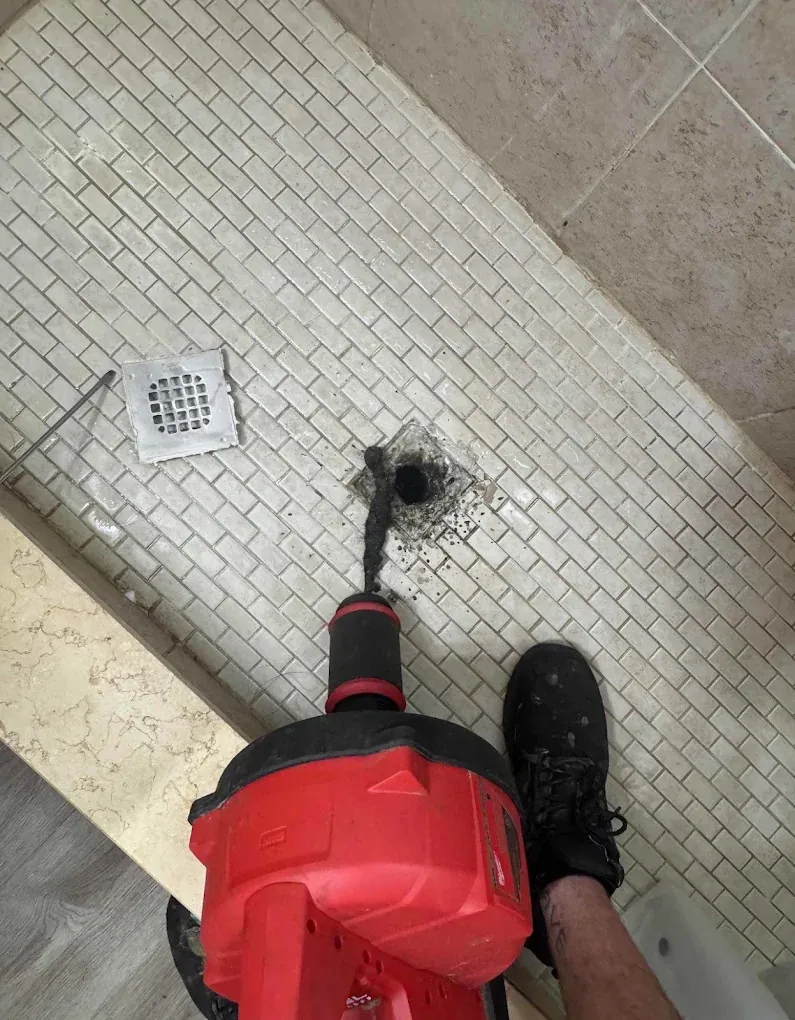
When the plunger cannot reach, the drain snake is the best drain opener available to homeowners. The cable physically grabs, breaks, or pulls out the blockage — hair mats, soap wads, small objects — removing it entirely rather than partially dissolving it. A basic 25-foot hand auger covers the vast majority of residential clogs, and the toilet-specific closet auger protects porcelain while reaching past the trapway.
For Recurring or Deep Clogs: Professional Drain Cleaning
This is what plumbers mean when they say the best drain cleaner is a professional one. Powered augers and hydro-jetting scour the pipe walls completely clean — removing the grease, scale, and root intrusion that household tools only poke through — and a camera inspection identifies why the clog keeps coming back. For clogs that return monthly, professional cleaning is the only fix that ends the cycle, and it is the recommendation behind our own drain cleaning service.
What About Homemade Drain Cleaners?
The classic baking soda and vinegar reaction produces fizzing that loosens biofilm and freshens drains — useful monthly maintenance for slow-but-flowing lines, followed by a hot water flush. It will not clear a standing clog, despite what enthusiastic tutorials suggest. Dish soap followed by hot water helps with grease-softening in kitchen lines. Both are safe, cheap, and genuinely useful as prevention. Neither replaces mechanical removal for an actual blockage.
What Plumbers Recommend for Different Drains
-
Kitchen sink (grease clogs): Hot water, dish soap, and a plunger; enzyme cleaner monthly as prevention; avoid chemical openers entirely — grease responds to heat and mechanical removal, not caustics
-
Bathroom sink and shower (hair and soap): Hand-removal, plunger, then a snake for depth; enzyme maintenance monthly to slow regrowth
-
Toilet: Flange plunger, then a closet auger; never chemical openers — the trapway holds caustic liquid against the porcelain
-
Main line: Nothing household-grade touches this; recurring multi-fixture symptoms need professional equipment
How to Avoid Needing Drain Cleaners at All
-
Keep grease, coffee grounds, and food scraps out of the kitchen drain
-
Use hair catchers in every shower and tub
-
Flush only toilet paper
-
Run enzyme maintenance monthly
-
Schedule professional cleaning annually — the only drain cleaner that prevents clogs instead of reacting to them
FAQ
What is the best drain cleaner for hair clogs?
A drain snake. Hair mats sit in the trap and just past it, where liquid products flow around them. The snake physically grabs and removes the hair. Follow with enzyme treatment monthly to slow regrowth.
Are liquid drain cleaners safe for old pipes?
The risk rises with pipe age. Caustic heat and corrosive action accelerate wear on older metal pipes and can damage glued PVC joints. Enzyme products and mechanical tools are safe for every pipe type and age.
What do plumbers use to unclog drains?
Powered augers for most clogs, hydro-jetting for grease and scale, and camera inspection to find the cause. Plumbers choose mechanical removal because it clears the full diameter of the pipe, not just a channel through the clog.
Is it bad to use drain cleaner in a toilet?
Yes. Chemical openers can crack porcelain with heat, rarely reach toilet clogs past the trapway, and leave hazardous liquid standing in the bowl. A flange plunger and closet auger handle toilet clogs safely.
Why does my drain keep clogging after I use drain cleaner?
Because liquid cleaners bore a partial channel through the clog while the buildup lining the pipe remains. The narrowed pipe catches debris again within weeks. Complete mechanical removal — snake or professional cleaning — is the only lasting fix.
Conclusion
The best drain cleaner is situational: enzyme products for maintenance, a plunger for most clogs, a snake for stubborn ones, and professional equipment for anything that keeps coming back. Liquid chemical openers sit at the bottom of the list — the strongest smell in the store and the weakest result in the pipe.
Drain that keeps coming back? Request service online — we clean drains properly across Northeast Florida, with camera inspections to find the cause, upfront pricing, and fast response every day of the year.
Need plumbing service?
Request service online or call our team for installation, repair, and maintenance.
Ready when you are
Plumbing emergency? We're on the way.
(904) 868-2319Call (904) 868-2319 or request service online — fast, reliable service every day of the year.
Big repair? Financing is available through Wisetack — see if you prequalify .