Can Olive Oil Go Down the Drain? Here's the Honest Answer
It happens to everyone: the pan of olive oil is still hot, the sink is right there, and pouring it down seems harmless enough. So — can olive oil go down the drain? No. Not olive oil, not vegetable oil, not bacon grease, and not even with hot water running. Every type of cooking oil is one of the worst things you can put down a sink, and here is exactly why — plus what to do if you already poured it.
Why Oil Down the Drain Is a Problem
Oil behaves like a liquid only while it is warm. The moment it cools below a certain temperature — which happens fast inside your pipes — it thickens, then hardens. Inside a drain line, that looks like this:
- Warm oil flows down and coats the pipe walls
- It cools and solidifies into a sticky, greasy film
- Food particles, coffee grounds, and soap scum stick to that film
- The layer builds with every pour until the pipe narrows and clogs
Plumbers call the worst version of this a FOG clog — fat, oil, and grease — and it is one of the most common blockages we clear in kitchen lines. It is also why “can you pour oil down the drain with hot water” deserves its own answer, which we will get to. The grease never makes it out of your plumbing. It just relocates the problem a few feet down the line, where it is harder to reach and more expensive to fix.
Can You Put Oil Down the Sink at All? Every Scenario, Answered
- Can you pour olive oil down the sink? No. Olive oil solidifies like any other cooking fat once it cools.
- Can vegetable oil go down the drain? No — same problem, even though it pours thinner than olive oil.
- Accidentally poured vegetable oil down the drain? One small accident will not clog a healthy line. Run hot water with dish soap for a minute to help emulsify and move it along, then stop worrying.
- Can you pour oil down the drain with hot water? No. Hot water only carries the oil further before it cools — and it always cools, usually inside your pipes, where it solidifies. You have moved the clog from the trap to a spot you cannot reach with a plunger.
- What about the garbage disposal? Also no. Disposals grind food, not grease, and grease dulls the grind ring while passing straight through to the line.
How to Dispose of Cooking Oil Properly
Safe disposal takes less effort than the cleanup from a grease clog:
- Small amounts: Let the oil cool, wipe the pan with a paper towel, and throw the towel in the trash
- Larger amounts: Pour cooled oil into a sealed container — an old jar, coffee can, or the bottle it came in — and put it in the garbage
- Grease: Scrape cooled grease into the trash, never the disposal
- Big batches: Some cities and recycling centers accept used cooking oil for recycling into biodiesel — check your local options
One pan, one paper towel, ten seconds. Compare that to a service call to auger a grease-clogged line, and the right answer is obvious.
What to Do If You Already Poured Oil Down the Drain
If the oil just went down and the drain is still flowing normally, run the hottest tap water with a generous squirt of dish soap for two to three minutes. Dish soap emulsifies grease — it breaks the oil into droplets that suspend in water and wash further along. This is damage control, not a habit to build.
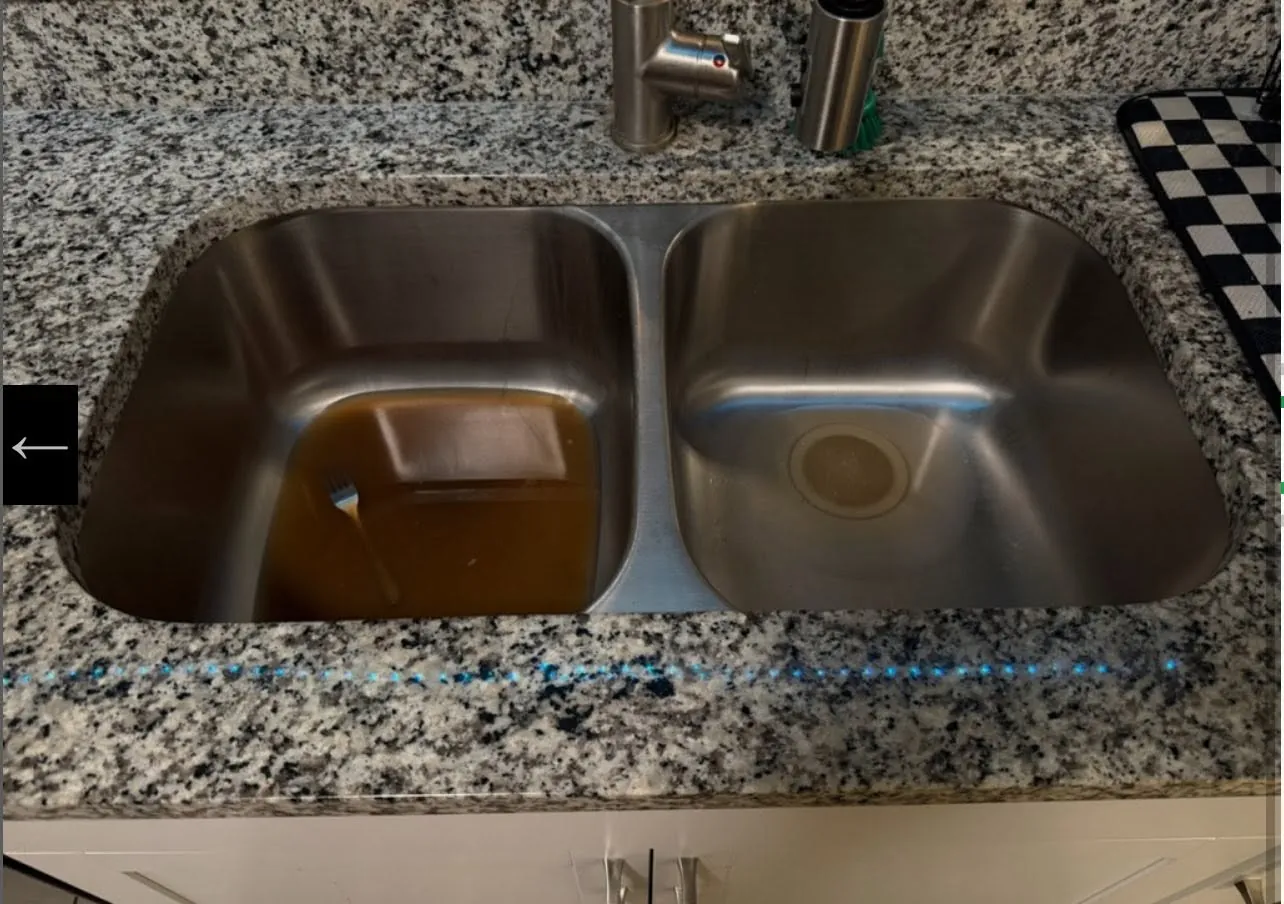
If the drain is already running slow, the grease has likely met its partner in crime — food buildup — and bonded into a real clog. Skip chemical drain openers; they rarely cut grease and can damage older pipes. Instead:
-
Pour a kettle of boiling water down in stages
-
Follow with dish soap and more hot water
-
If it is still slow, it is time for a plunger or a plumber’s auger
Grease clogs respond best to mechanical removal. Hot water alone melts the surface and lets it re-harden downstream.
How to Tell If Grease Is Already Clogging Your Line
- The kitchen sink drains slower every week, not just sometimes
- The drain gurgles as water struggles past the narrowing
- A sewer smell rises from the sink when the water runs
- The dishwasher backs up into the sink when it drains
Kitchen lines do not slow down for no reason. A steady decline almost always means buildup — and grease is usually the foundation of it. Our drain cleaning service clears grease lines completely, not just enough to flow again.
FAQ
Can olive oil go down the drain if I run hot water?
No. Hot water delays the problem, never solves it. The oil cools somewhere in your pipes and hardens there — usually past every point you could clean yourself.
I accidentally poured vegetable oil down the drain. What now?
Once is fine — run hot water with dish soap to emulsify it and move it along. Worry only if the drain slows over the following weeks, which suggests the line was already building buildup.
Is olive oil safer for pipes than other oils?
No. All cooking oils behave the same way once they cool: they thicken and solidify. Olive, vegetable, canola, coconut — pour them all in the trash instead.
Will a garbage disposal handle grease?
No. Disposals grind solid food into smaller pieces; they do nothing to grease. Grease passes through the disposal and solidifies in the line below it.
What’s the worst-case scenario from pouring grease down the sink?
A fully blocked kitchen line that backs up during a dinner party — or a clog deep in the main line that requires professional augering. Grease clogs also trap other debris, so they grow faster the longer they sit.
Conclusion
The rule is one sentence long: no oil down the drain, ever, under any circumstances — hot water and garbage disposals included. Wipe, can, or absorb it, and your kitchen line will outlive every pan in your cabinet.
Kitchen drain running slow from past grease habits? Request service online — we clear grease clogs and keep kitchen drains flowing across Northeast Florida, with upfront pricing and fast response every day of the year.
Need plumbing service?
Request service online or call our team for installation, repair, and maintenance.
Ready when you are
Plumbing emergency? We're on the way.
(904) 868-2319Call (904) 868-2319 or request service online — fast, reliable service every day of the year.
Big repair? Financing is available through Wisetack — see if you prequalify .