Clogged Toilet? How to Unclog It Fast
A clogged toilet has a way of demanding attention right now. The good news: most toilet clogs are soft blockages near the bowl, and a few right moves with a plunger clear them in minutes. Here is how to handle everything from a simple clog to a badly blocked toilet — and how to know when the problem is bigger than the bowl.
My Toilet Is Clogged: First Moves
Before anything else, stop the water. Lift the tank lid and push the flapper valve closed, or shut off the supply valve behind the toilet. Stopping inflow keeps an overflowing bowl from becoming a flooded floor. Then grab a flange plunger — the kind with the extra rubber collar that folds out to seal the drain opening. A flat sink plunger fights you on a toilet; the flange style creates the seal that actually moves the clog.
How to Unclog a Toilet in 5 Minutes
-
Make sure there is enough water in the bowl to cover the plunger cup — add some from a bucket if the bowl ran low.
-
Seat the plunger over the drain opening at a slight angle to work air out, then press to a seal.
-
Push down and pull up in firm, steady strokes. Vigorous splashing wastes energy; controlled strokes build the pressure that moves the clog.
-
After 10 to 15 strokes, pull the plunger away on an upstroke and watch whether the water drains.
-
If the level drops, flush once with the plunger ready. If it backs up again, repeat the cycle two or three times.
Most clogs break loose inside five minutes exactly this way.
How to Unclog a Toilet With Hot Water
No plunger? Hot water alone can soften and shift a soft clog. Heat a pot of water on the stove until hot — not boiling. Boiling water can crack porcelain, and that turns a plumbing problem into a much more expensive one. Pour it into the bowl from waist height so the force of the stream helps break things up. Add a squirt of dish soap first if you have it; the soap lubricates the clog. Let it sit 10 minutes, then try flushing. This method works on soft clogs and does nothing for hard blockages like toys or wipes.
How to Unblock a Badly Blocked Toilet Fast
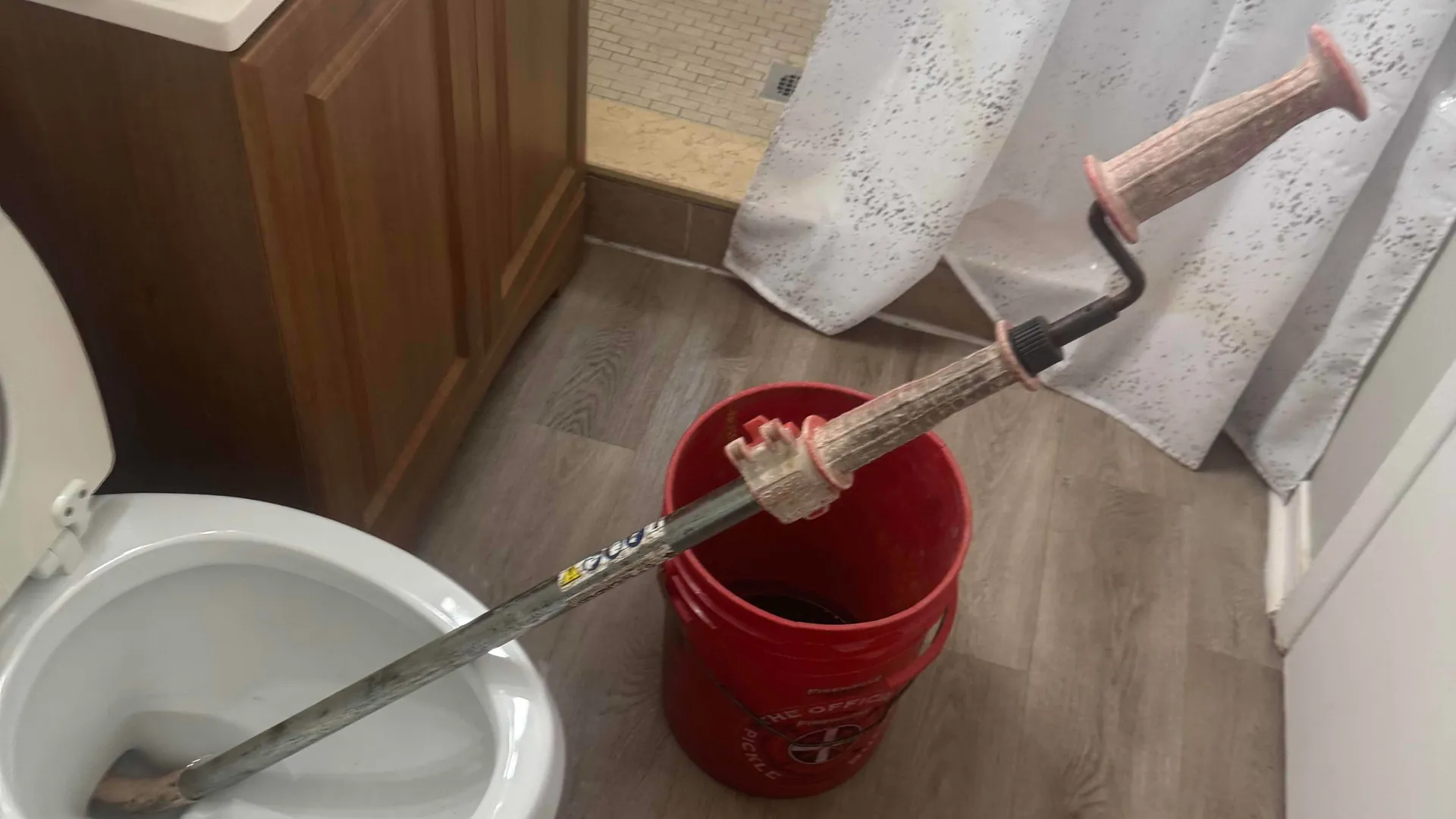
When plunging fails, the next tool is a toilet auger — also called a closet auger. It is a cable with a crank handle and a protective sleeve designed specifically for toilets.
-
Insert the auger into the drain with the sleeve resting on the bowl
-
Crank clockwise as you push the cable down the trapway
-
When you feel resistance, crank through it, then reverse the cable out
-
The clog breaks apart or comes back on the end of the cable
Flush to confirm. If the water drains normally, you are done. Augers cost about what a single service call does, so one successful DIY pays for the tool.
Will a Poop-Clogged Toilet Unclog Itself? How Long Does It Take?
Sometimes — but do not count on it. Organic matter does break down in water, and a minor clog can soften and clear on its own over several hours. If the water level slowly drops on its own, that is the clog dissolving, and it may resolve overnight. But every flush attempt in the meantime can overflow the bowl, and some clogs simply will not dissolve. The smart play: give it one hour without flushing, try the hot water trick, and if it still backs up, plunge it. A clog that survives all three is not a self-solver.
When a Clog Means a Bigger Problem
Some clogs are not really toilet clogs at all. Call a plumber when:
-
Multiple fixtures back up at once — that points to the main sewer line
-
The toilet bubbles or gurgles when the shower runs
-
Clogs keep returning weekly despite careful flushing
-
Water rises in the shower when you flush
Those are drain and sewer problems hiding behind a toilet symptom, and no amount of plunging fixes a line with root intrusion or a belly. Toilet repair is our bread and butter, and recurring clogs are exactly the kind of thing we diagnose in one visit.
FAQ
Will a toilet unclog itself overnight?
Often enough to be worth an hour’s patience for soft clogs. If the bowl water drains slowly on its own, the clog is dissolving. If nothing changes after a few hours, it will not fix itself — act before the next user overflows it.
Can I use chemical drain opener in a toilet?
No. Chemical openers generate heat that can crack porcelain, they rarely reach toilet clogs past the trapway, and they leave caustic liquid in a bowl you still have to work on. Stick to mechanical methods.
Why does my toilet clog so easily?
Low-flow older models, a partially blocked trapway, a weak flush, or a developing sewer line issue are the usual suspects. Frequent clogs deserve a diagnosis, not another plunger.
What should I never flush down a toilet?
Wipes (even flushable-labeled ones), paper towels, feminine products, cotton items, dental floss, and grease. Toilets are designed for toilet paper and waste — everything else is a clog in waiting.
Is a clogged toilet a plumbing emergency?
An overflowing toilet that you cannot stop is — shut the water off and call. A simple clog that holds water in the bowl is not; it waits patiently for a plunger.
Conclusion
A clogged toilet is one of the few home problems that is mostly about technique: seal, steady strokes, patience. Clear most clogs with a flange plunger, soften stubborn ones with hot water and dish soap, break hard ones with an auger — and respect the signs that say the real problem is further down the line.
Clog that will not quit? Request service online — we unclog toilets and clear drains across Northeast Florida, nights, weekends, and holidays, with upfront pricing before any work begins.
Need plumbing service?
Request service online or call our team for installation, repair, and maintenance.
Ready when you are
Plumbing emergency? We're on the way.
(904) 868-2319Call (904) 868-2319 or request service online — fast, reliable service every day of the year.
Big repair? Financing is available through Wisetack — see if you prequalify .