Sewer Smell After Heavy Rain in Florida? Causes & Next Steps
A sewer smell that appears after heavy rain is easy to dismiss at first. Maybe it fades by morning. Maybe it only shows up near one bathroom or the laundry room. But when the odor returns after every storm, your plumbing is usually telling you something.
In Northeast Florida, heavy rain can saturate the ground quickly. Sandy soil drains fast in some areas, while clay pockets, low spots, and a high water table hold water in others. That extra groundwater puts pressure on buried sewer lines and changes the way air moves through the system. If there is a dry trap, blocked vent, loose cap, root intrusion, or crack in the line, storm conditions can make the odor much more noticeable.
The key is figuring out whether you are dealing with a simple maintenance issue or an early sign of a bigger sewer problem.
Quick answer
A faint sewer odor that disappears quickly after an extreme storm may not be an emergency. A strong odor, a smell that keeps returning, gurgling drains, water backing up, or odor near the base of a toilet should be checked. Heavy rain often exposes a weak point that already exists.
How rain changes the pressure in your plumbing
Your drain and sewer system is designed to carry wastewater out while keeping sewer gas sealed away from your home. Water in each trap creates a barrier. Roof vents allow air to move through the system so wastewater flows smoothly and gases escape above the home.
During heavy rain, several things can happen at once:
- Soil around the sewer line becomes saturated.
- Municipal or neighborhood lines may carry extra storm-related flow.
- Air pressure inside the drain system changes.
- Small gaps, dry traps, or partial blockages become easier to notice.
That is why the odor may seem weather-related even when the root cause is inside the home.
Common causes of sewer odor after storms
1. A dry or lightly used drain trap
Every sink, tub, shower, and floor drain should have a trap holding water. That water blocks sewer gas. A guest bathroom, laundry sink, garage drain, or seldom-used shower can dry out enough to let odor through.
Florida humidity slows evaporation compared with a dry climate, but traps still dry out — especially in homes with strong air conditioning, exhaust fans, or fixtures that sit unused for weeks.
Simple check: Run water into every unused drain for 20 to 30 seconds. If the odor fades and does not return, the trap was probably dry.
2. A blocked or damaged plumbing vent
Roof vents can become restricted by leaves, nests, debris, or storm damage. When the vent cannot move air correctly, the system may pull water out of traps or push sewer gas back inside.
This is more likely when you hear gurgling, notice slow drainage, or smell odor near several fixtures rather than just one.
3. A loose cleanout cap or damaged drain fitting
Sewer cleanouts are access points for maintenance. If a cap is loose, cracked, missing, or poorly sealed, odor can escape near the cleanout location. The same can happen around a damaged trap, loose toilet, or failed wax ring.
Storm pressure changes do not create these defects, but they can make them obvious.
4. A partial sewer blockage
Grease, wipes, scale, and tree roots can narrow the line without causing a full backup right away. During heavy rain, extra water and pressure can force odor through the path of least resistance.
If the smell comes with slow drains, bubbling toilets, or water rising in a shower, the line may need main sewer cleaning before the problem becomes a full backup.
5. Cracked pipe or root intrusion
Mature trees are common across Jacksonville, Orange Park, St. Augustine, and surrounding neighborhoods. Roots naturally seek moisture. If they enter a small crack or loose joint in a sewer line, they can trap debris and damage the pipe further.
A damaged line may smell worse after rain because groundwater surrounds the pipe and pressure inside the line changes. In those cases, sewer line repair and replacement may be the correct long-term fix — but the first step is proving what is happening inside the pipe.
Safe checks before you call
You do not need to take anything apart to gather useful information. Try these steps:
- Run water in unused fixtures. Refill traps in guest baths, laundry sinks, tubs, showers, and floor drains.
- Note where the odor is strongest. Check bathrooms, laundry areas, garage drains, and the base of toilets.
- Listen for gurgling. Flush a toilet and listen at nearby tubs or showers. Gurgling can signal a venting or main-line issue.
- Check for cleanout caps outside. Look for loose, broken, or missing caps near the sewer path. Do not open a cleanout during a backup.
- Avoid chemical drain cleaners. They rarely solve storm-related odor and can make professional clearing more difficult.
- Watch for repeat patterns. If the smell appears after every moderate or heavy rain, write down which fixtures are affected.
These details help a plumber narrow the source faster.
Red flags that should not wait
Call for help promptly if you notice:
- Sewage or dirty water coming up through a drain.
- More than one fixture draining slowly at the same time.
- A strong odor that lasts more than a day.
- Gurgling in tubs or showers when toilets flush.
- Water around the base of a toilet after storms.
- Wet spots, sunken areas, or unusually green strips in the yard near the sewer path.
- A recurring odor that disappears and returns with rainfall.
Active backup, sewage inside the home, or flooding needs emergency plumbing help, especially if water is reaching floors, walls, or belongings.
How a plumber finds the real source
Odor problems can be misleading because sewer gas travels. A smell in one bathroom does not always mean the failure is behind that wall.
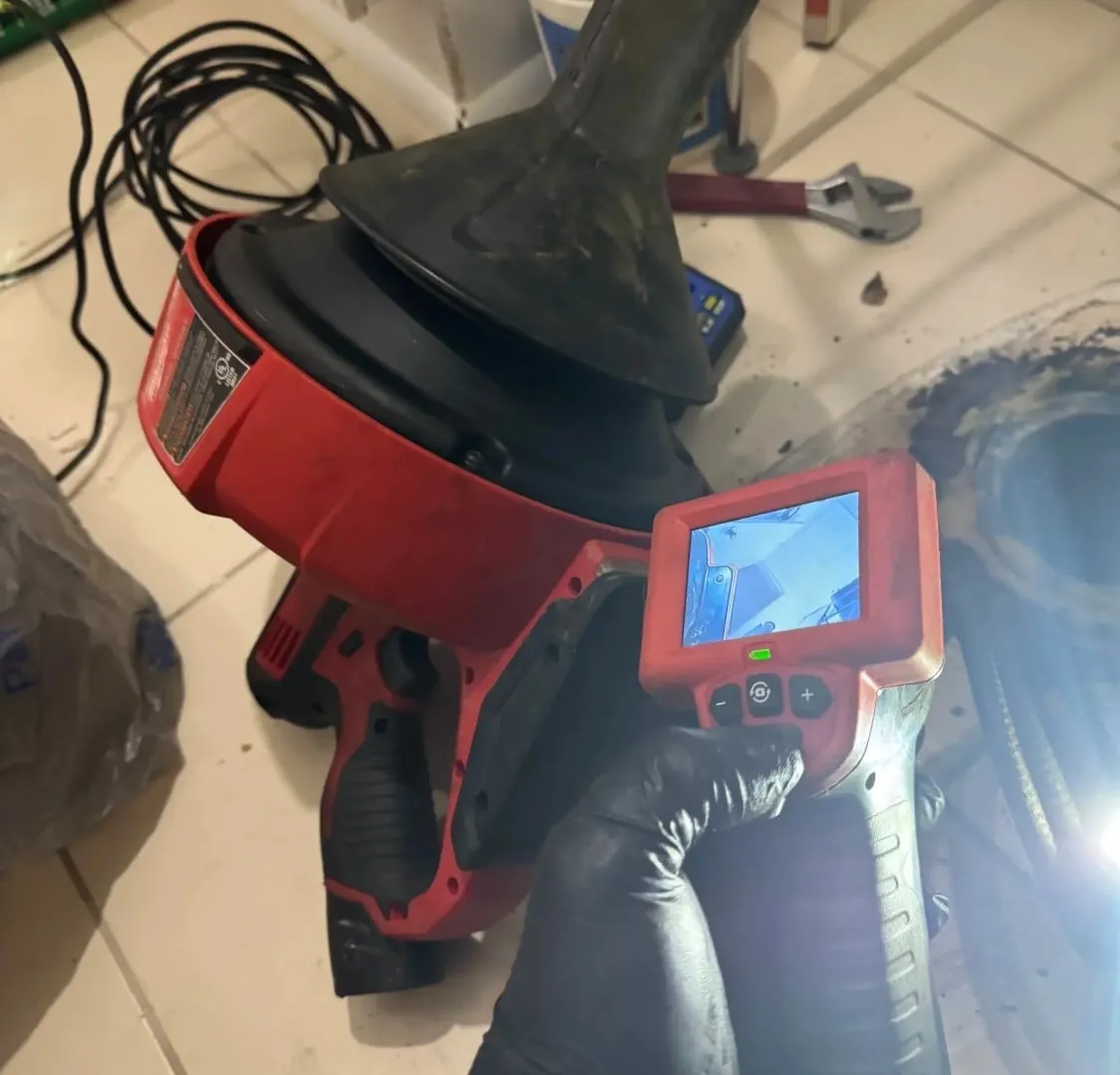
A plumber may start by checking traps, toilet seals, accessible drain fittings, and cleanouts. If the pattern points to a deeper issue, a sewer camera inspection can show roots, scale, cracks, bellies, offsets, or blockage inside the line without guessing.
Camera evidence matters because it separates a maintenance problem from a structural one. A line full of grease may need cleaning. A line with roots at one joint may need a localized repair. A collapsed or badly deteriorated line may need replacement. Each solution is different, and the cheapest correct fix starts with an accurate diagnosis.
How to reduce storm-related odor before the next rainy stretch
A few preventive habits can lower the chance of repeat odor:
- Run water in rarely used drains every few weeks.
- Keep roof vents clear of visible debris.
- Replace cracked cleanout caps.
- Do not flush wipes, paper towels, or hygiene products.
- Keep grease and food scraps out of kitchen drains.
- Address slow drains before storm season peaks.
- Schedule a camera inspection if the home has a history of roots or recurring clogs.
If your home sits near mature trees or has older underground piping, preventive checks are usually less disruptive than waiting for a backup during a storm.
FAQs
Why does my house smell like sewage only after it rains?
Rain changes pressure and groundwater conditions around the sewer system. If there is a dry trap, vent restriction, loose fitting, partial blockage, or damaged pipe, the odor may become noticeable only under those conditions.
Is sewer gas dangerous?
Strong or persistent sewer odor should not be ignored. At minimum, it indicates a seal, venting, drainage, or line problem. Ventilate the area and call a professional if the smell is intense, recurring, or accompanied by symptoms such as headaches or nausea.
Can I pour bleach down the drain to get rid of the smell?
Bleach may mask odor briefly, but it does not fix a dry trap, blocked vent, root intrusion, or broken line. It can also create hazards if mixed with other chemicals. Start by refilling traps and identifying where the smell is strongest.
Why does the smell seem strongest near the shower or tub?
Tubs and showers are low fixtures, so odor from a main-line issue may show up there first. A dry shower trap or dirty drain can also create a similar smell. If multiple fixtures are affected, the issue may be farther downstream.
Do I need a sewer camera inspection for an odor?
Not every odor requires a camera inspection. If refilling traps solves it, you may not need further work. But if the smell returns after rain, several fixtures are affected, or the home has a history of roots or backups, a camera inspection is the best way to see the condition of the line.
Bottom line
A sewer smell after heavy rain is usually a clue, not a random event. Sometimes the fix is as simple as adding water to a dry trap. Other times, the storm exposes a venting issue, blockage, root intrusion, or damaged sewer line.
R Stud Plumbing helps homeowners across Northeast Florida trace sewer odors to the source and fix the right problem the first time. For fast help in Jacksonville, Orange Park, St. Augustine, or nearby communities, call (904) 868-2319 or contact us online.
Need plumbing service?
Request service online or call our team for installation, repair, and maintenance.
Ready when you are
Plumbing emergency? We're on the way.
(904) 868-2319Call (904) 868-2319 or request service online — fast, reliable service every day of the year.
Big repair? Financing is available through Wisetack — see if you prequalify .